Charlotte
Myers Park · Dilworth · SouthPark
Heating and cooling replacement, planned for your North Carolina home.
Your advisor confirms service at your address.
Myers Park · Dilworth · SouthPark
Inside the Beltline · North Hills · Five Points
Fisher Park · Starmount Forest · Sunset Hills
Haymount · Jack Britt · Hope Mills
Yes. Across the Piedmont, Triangle, and Sandhills, winter temperatures spend far more hours between 32°F and 55°F than below freezing—the exact range where a newer heat pump operates most efficiently. For chilly mornings in the teens or twenties, cold-climate variable-speed heat pumps or auxiliary heat strips keep indoor temperatures steady.
An oversized, single-stage air conditioner blasts cold air for ten minutes and shuts off before the evaporator coil can condense enough moisture out of the air. When we design your replacement, we calculate your home's true sensible and latent cooling load and often recommend two-stage or variable-speed equipment that runs longer at lower power to dry the air.
Yes. North Carolina county and municipal building departments require a mechanical (and sometimes electrical) permit whenever a central air conditioner, furnace, or heat pump is replaced. Etho Home and our licensed installation partners handle permitting and schedule the required local inspection for you.
Etho Home plans your system, puts the price in writing, and manages the project with you. A licensed partner crew in Etho uniform performs the installation, and Etho stays your point of contact through final inspection.
Most of North Carolina's major metros sit in IECC Climate Zone 3A (with northern Piedmont pockets historically straddling 4A), a warm-humid zone defined by muggy summers where dew points regularly climb into the 70s and winters bring brisk overnight freezes. Standard single-stage air conditioners often cool the air too quickly and shut off before pulling moisture out of the home, leaving rooms clammy. Variable-speed heat pumps and two-stage systems run longer, gentler cycles that control indoor humidity from May through September while providing efficient electric or dual-fuel heating through January and February.
Most North Carolina metros have muggy summers with dew points in the 70s and brisk winter freezes. Single-stage air conditioners can shut off before removing that moisture, leaving rooms clammy.
Vented and encapsulated crawlspaces across the Piedmont and Sandhills place return ductwork right next to damp earth. Pairing a variable-capacity blower with sealed duct connections and whole-home dehumidification keeps hardwood floors from cupping and stops musty summer air.
Newer heat pumps easily handle the majority of a North Carolina winter, where daytime highs usually rebound into the 40s or 50s. If your home already has a Piedmont Natural Gas line, a dual-fuel system pairs an electric heat pump for mild weather with a gas furnace for freezing nights.
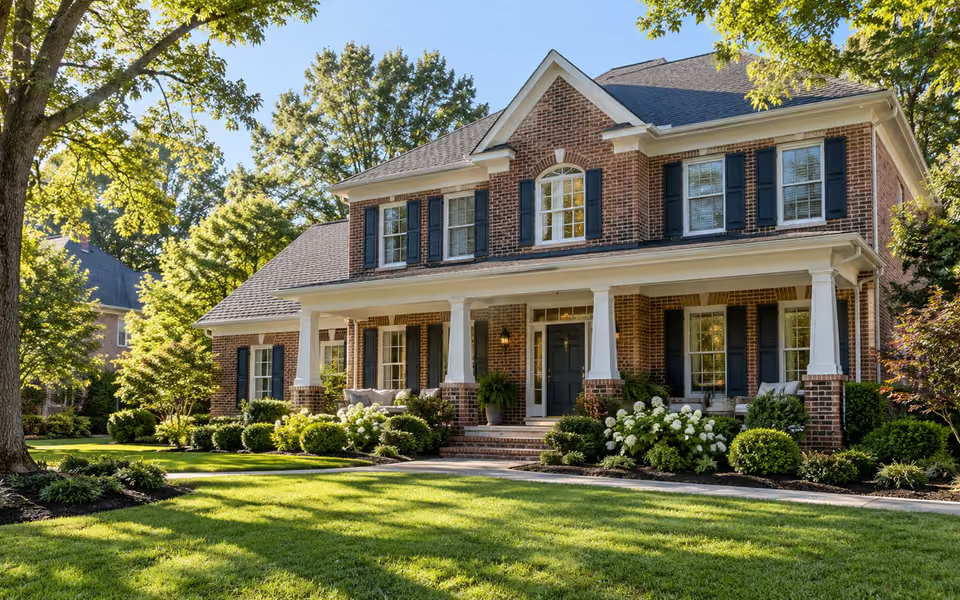
Transitional brick colonials and two-story craftsman homes built since the 1990s frequently suffer from hot upstairs bedrooms because attic air handlers bake in 130°F roof spaces. Proper zoning, duct balancing, or a dedicated upstairs heat pump solves the second-floor divide.
Your advisor confirms the system, scope, and price.
Build my quoteSee how it works