Cooler rooms, quieter summers.
Replace your central air conditioner with cooling sized for your home.
Installs are performed by licensed partner crews in Etho uniform.
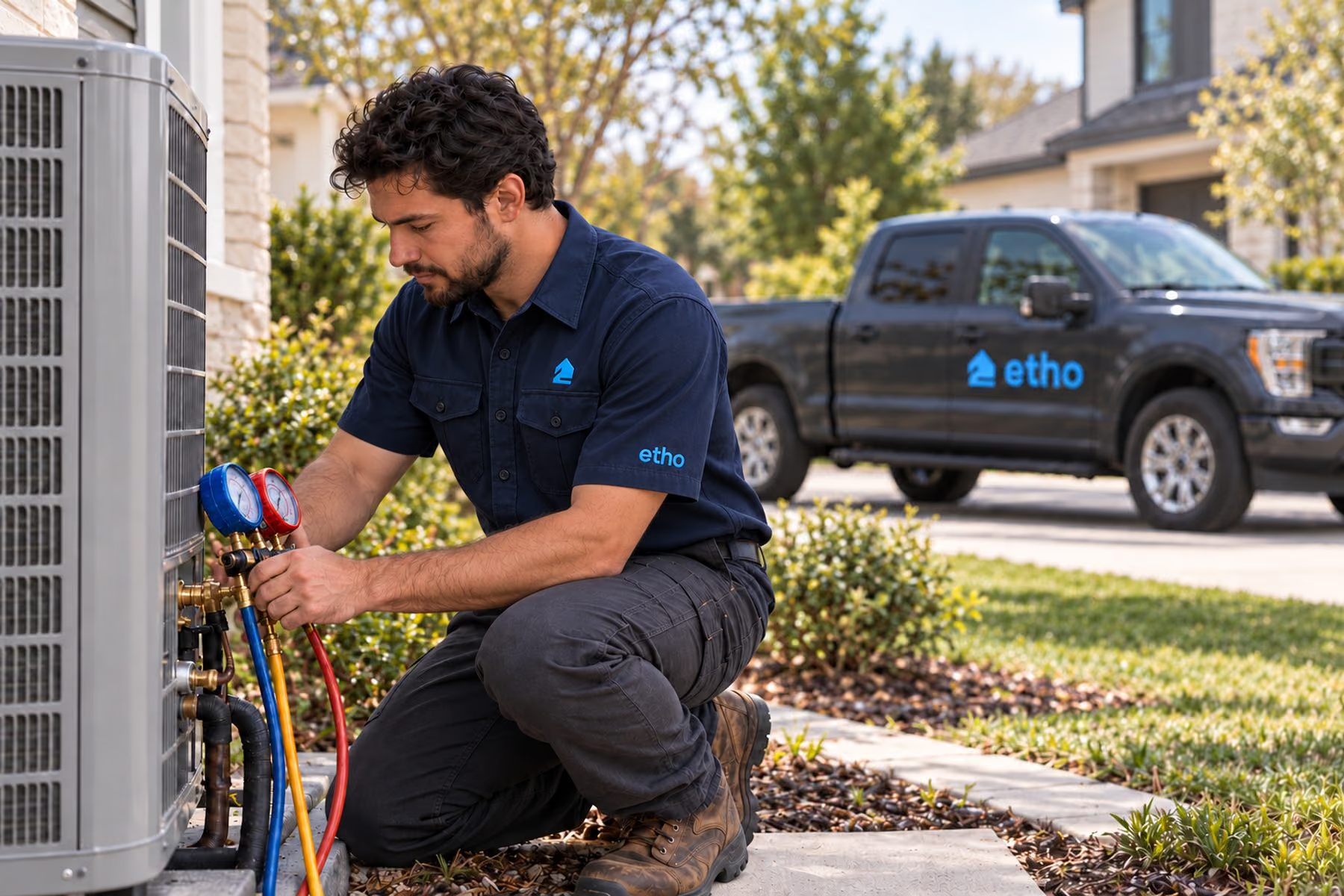
What’s included.
- Home and ductwork assessment
- Matched indoor and outdoor equipment
- Licensed installation and old-unit removal
- Permits, system testing, and inspection coordination
Compare your options.
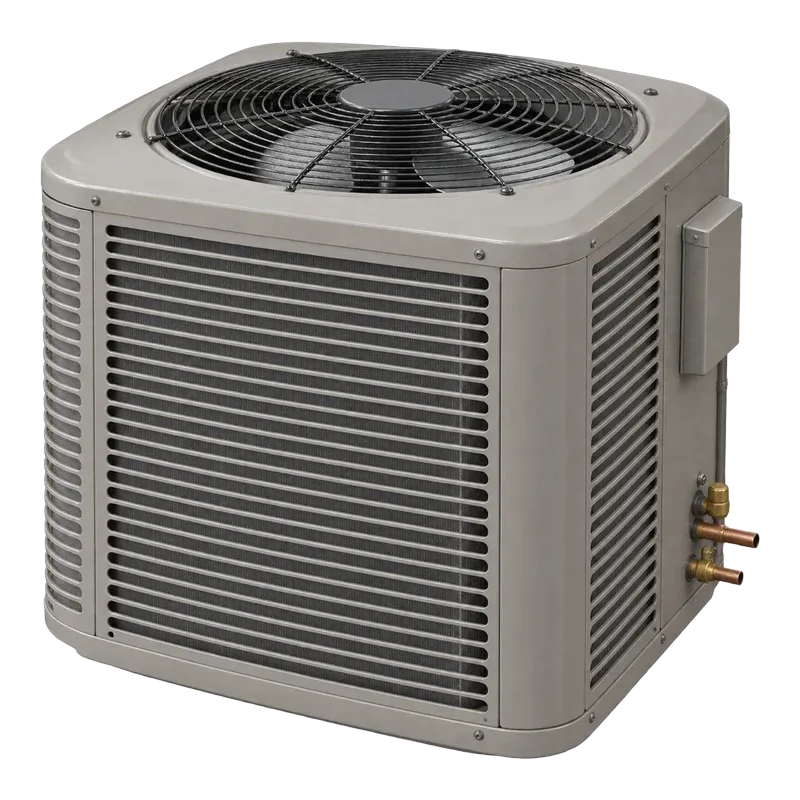
Good
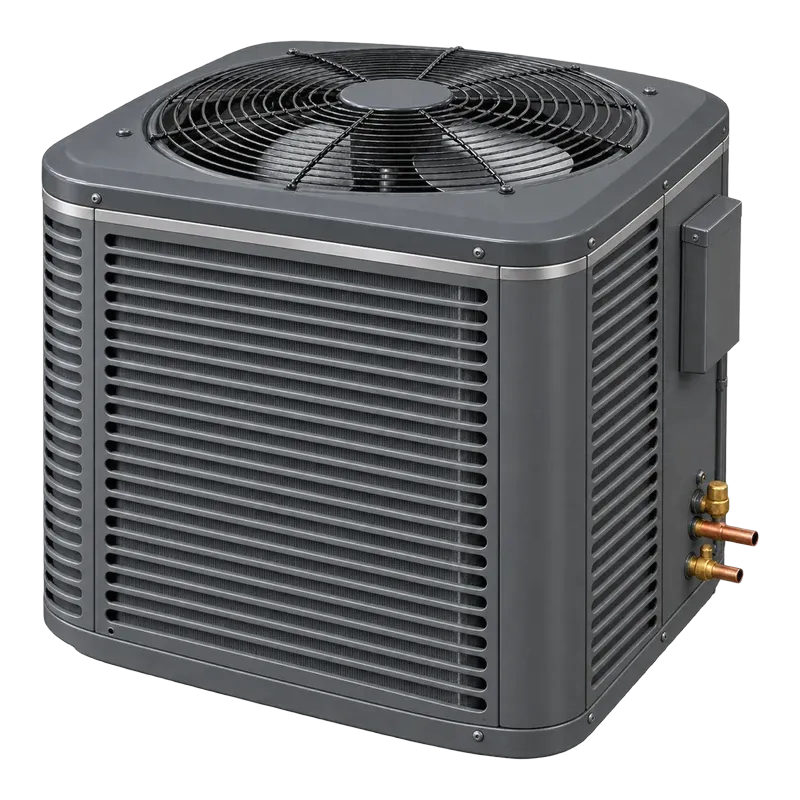
Better
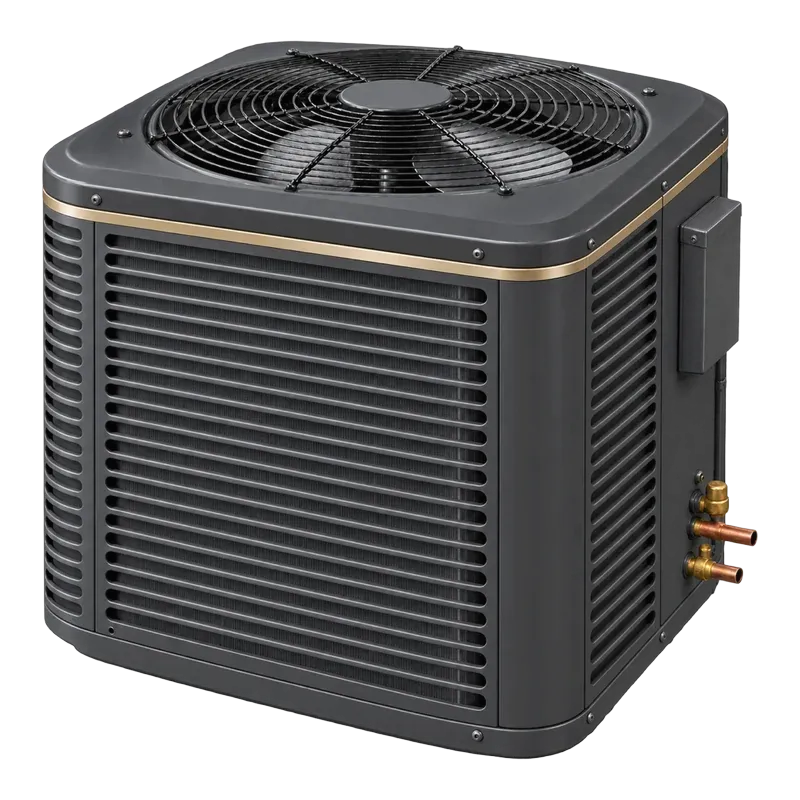
Best
Illustrations are examples. Your advisor confirms the equipment. Build my quote
| Tier | Compressor type | How it runs | Best for |
|---|---|---|---|
| Good | Single-stage | Runs at 100% capacity whenever cooling is called for, then shuts off | Budget-conscious replacements and milder summer climates |
| Better | Two-stage | Runs around 65–70% capacity most days; shifts to 100% only on peak heat afternoons | Two-story homes and humid summers where longer, gentler cycles help |
| Best | Variable-speed (inverter) | Adjusts output in small increments to hold steady temperature and humidity | Quieter operation, humid climates, and homes with uneven room temperatures |
Your price depends on the equipment, your home, and installation needs. See financing.
Questions about AC replacement.
Should I replace my indoor coil and furnace at the same time as my AC?
Replace the indoor evaporator coil with the outdoor condenser so the refrigerant and metering devices match. If your furnace or air handler is also aging, replacing both at once can save labor and pair the new coil with a newer blower.
What SEER2 rating makes sense for my home?
SEER2 measures how efficiently an air conditioner cools across a season. Entry-level systems meet federal regional minimums. Two-stage and variable-speed systems typically use less summer electricity and remove more indoor humidity.
Why not replace my central AC with a heat pump instead?
Many homeowners do. A heat pump cools like a central air conditioner in the summer, and it can also heat your home in the winter. You can compare both options in your quote.
What refrigerant will my new air conditioner use?
Under the federal AIM Act phasedown, new residential air conditioners manufactured from 2025 onward use lower-global-warming-potential refrigerants such as R-454B or R-32 instead of older R-410A.
How long does a central AC replacement take?
Installation time depends on your equipment and site conditions, including any ductwork, electrical work, or equipment relocation. Your advisor confirms the expected schedule for your project before installation.
Sizing and efficiency.
Sizing and efficiency.
Built for humidity control
Two-stage and variable-speed condensers run longer at lower speeds to pull sticky summer moisture out of your indoor air.
Sized by calculation, not guesswork
A load calculation sets the size, instead of copying the tonnage sticker on your old outdoor unit.
Matched indoor and outdoor coils
Replacing both the outdoor condenser and indoor evaporator coil helps the efficiency rating on the label match what you get at home.
How central air conditioning works
A split-system central air conditioner doesn’t create cold air out of nothing. It removes heat and moisture from the air already inside your home. Warm indoor air passes across a cold indoor evaporator coil, where liquid refrigerant absorbs the heat and condenses humidity into a drain line. The refrigerant then travels through copper lines to the outdoor condenser, releases that heat into the yard, and cycles back inside.
When an older system starts failing, you feel the symptoms before it stops altogether. Cycles get longer, indoor humidity creeps up, and the outdoor fan roars just to hold temperature at 4 p.m. Newer systems solve those headaches with quieter fan blades, improved coil designs, and compressors that adjust their output to the weather outside.
Not sure whether your current unit has another summer left? Read our guide on signs you need a new AC.
Good, better, and best cooling options
Choosing a replacement air conditioner comes down to how the compressor and indoor blower run. Systems fall into three tiers so you can weigh comfort against budget:
Understanding SEER2
Every central air conditioner carries a SEER2 (Seasonal Energy Efficiency Ratio 2) rating. Unlike older SEER ratings, SEER2 tests equipment under higher external static pressure to reflect real-world residential ductwork. In the northern United States, new split-system central air conditioners must meet a minimum of 13.4 SEER2, while the Southeast and Southwest regions require at least 14.3 SEER2 (15.0 SEER2 prior to the test procedure conversion). Look at our deep dive on SEER2 ratings explained to see how efficiency translates into operating costs.
Newer systems also transition away from R-410A to lower-GWP A2L refrigerants like R-454B and R-32 under the federal AIM Act phasedown. See what that means for equipment design and serviceability in our R-454B refrigerant change guide.
Why proper sizing matters more than brand
Homeowners spend hours researching equipment brands, yet the way a system is sized and commissioned has a much bigger impact on day-to-day comfort.
If an air conditioner is oversized, it blasts cold air for ten minutes, satisfies the thermostat, and shuts off before it has run long enough to pull moisture off the indoor coil. The result is a clammy, cool house and extra wear on the compressor from constant short-cycling. If a system is undersized, it runs nonstop on July afternoons and still falls behind.
Matching the nameplate on your old unit is not sizing, especially if you have added insulation, replaced windows, or finished a basement since it was installed. A load calculation uses your square footage, orientation, insulation, windows, and local climate. Learn more in our guide on what size HVAC system you need.
What affects the price of an AC replacement
No two installations are identical, which is why ballpark phone quotes rarely match the final invoice. Your total replacement cost depends on:
- System capacity (tonnage): Larger homes require higher-capacity condensers, larger coils, and properly matched blower airflow.
- Efficiency and staging tier: Stepping up from a single-stage unit to a two-stage or variable-speed inverter system increases equipment cost while improving comfort and sound levels.
- Indoor equipment pairing: Replacing just the outdoor condenser and evaporator coil costs less at the start than replacing the full system alongside a furnace replacement or upgrading to a year-round heat pump.
- Ductwork, line set, and electrical updates: Undersized return drops, damaged refrigerant lines, or an outdated outdoor disconnect box should be corrected during installation so the new unit can breathe and run safely.
- Comfort upgrades: Many homeowners bundle indoor air quality filtration or smart thermostats while the crew is already on site.
For a full breakdown of equipment and installation factors, read our HVAC replacement cost guide.
Find the right AC for your home.
Your advisor confirms the equipment, scope, and price with you.