One system for every season.
Heat and cool your home with an electric heat pump, or pair one with a gas furnace.
Installs are performed by licensed partner crews in Etho uniform.
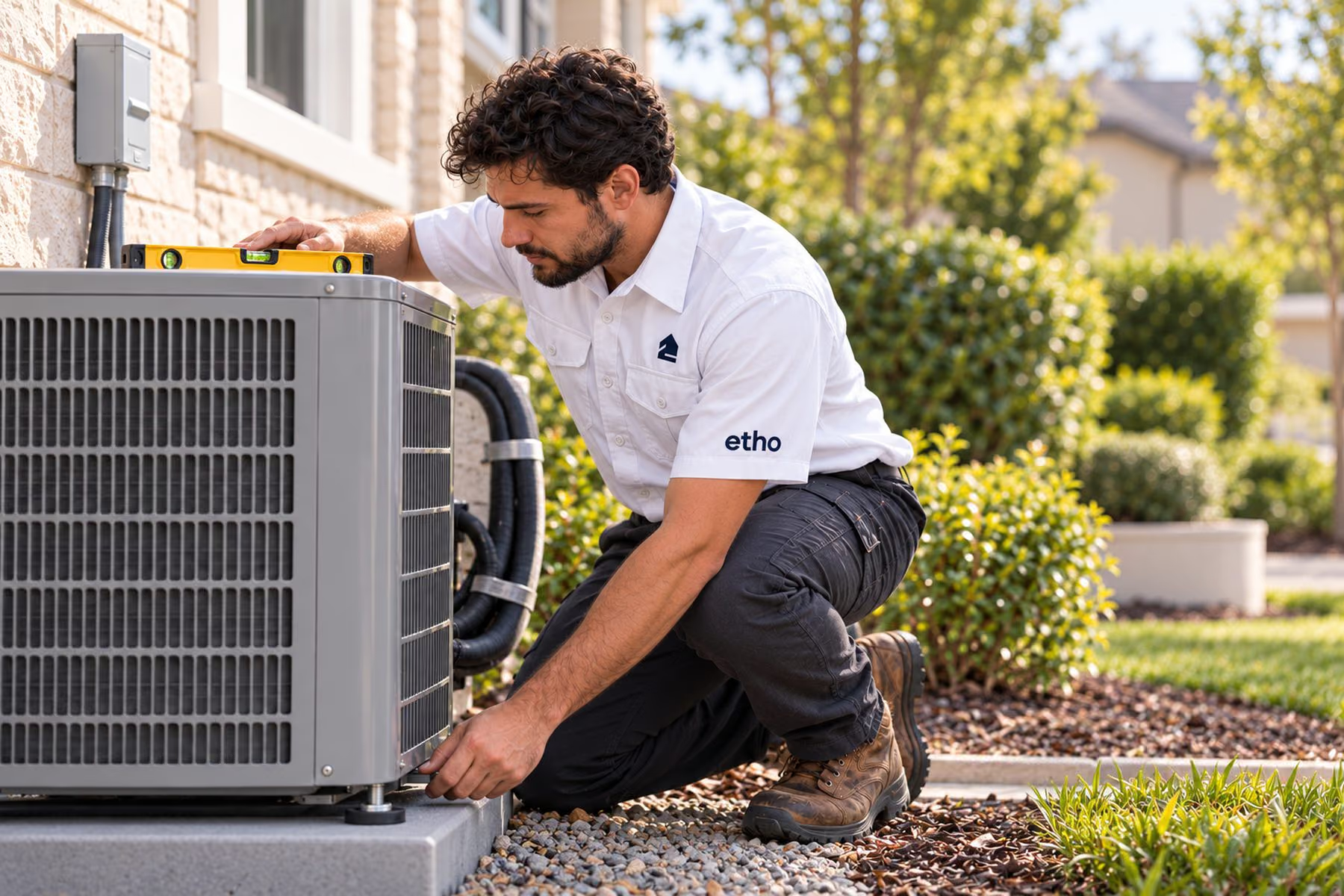
What’s included.
- Heating and cooling assessment
- Equipment sized for your climate
- Licensed installation and old-unit removal
- System testing and permit coordination
Compare your options.
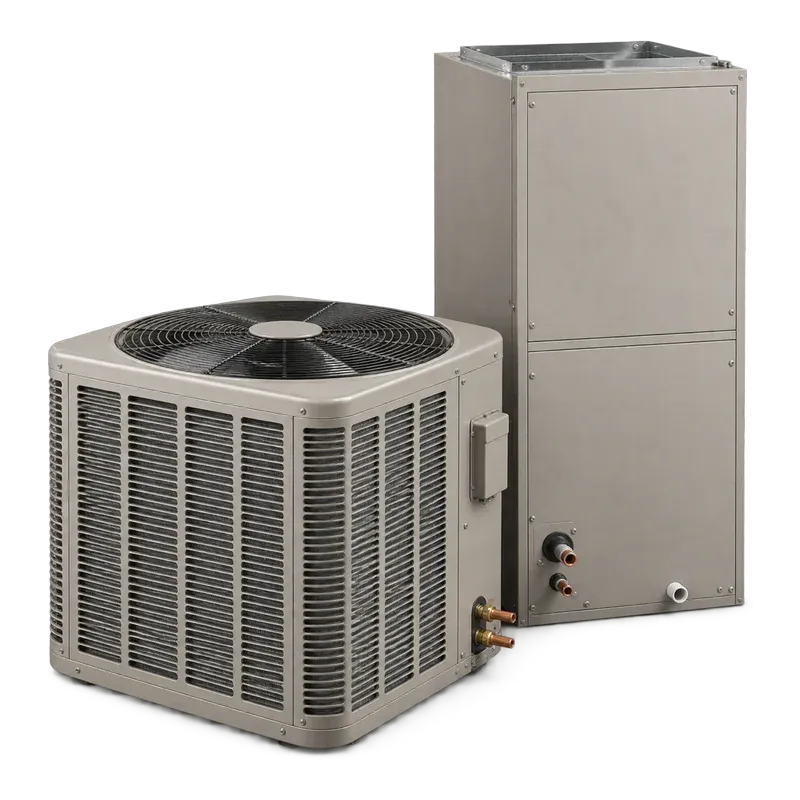
Good
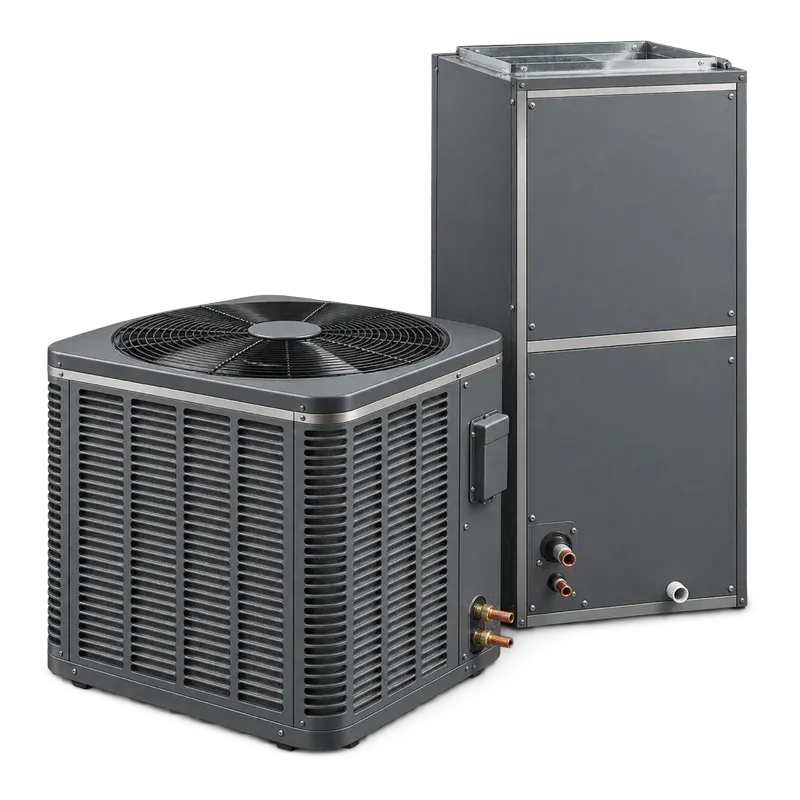
Better
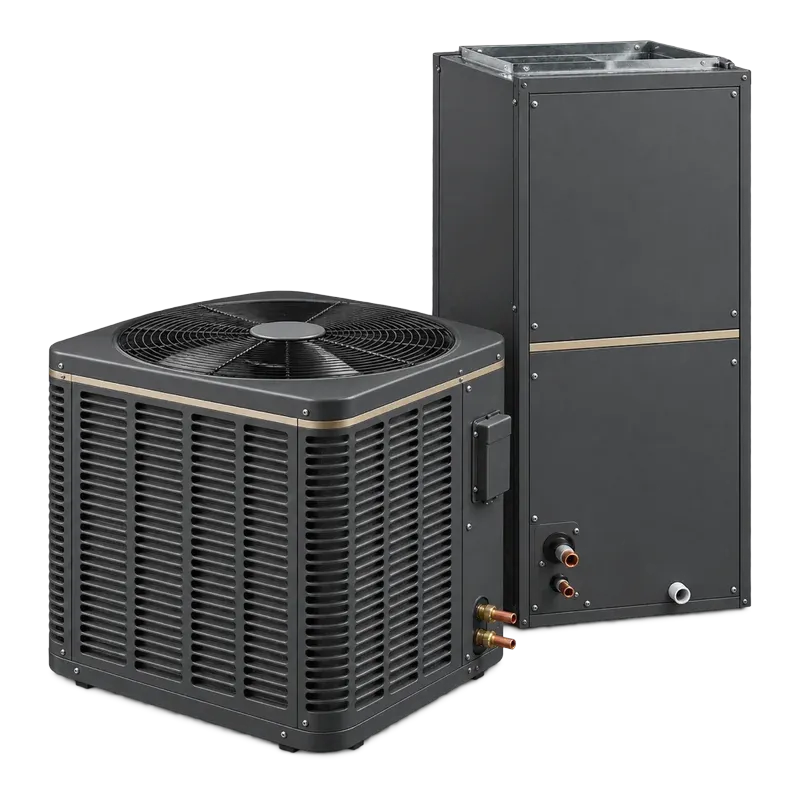
Best
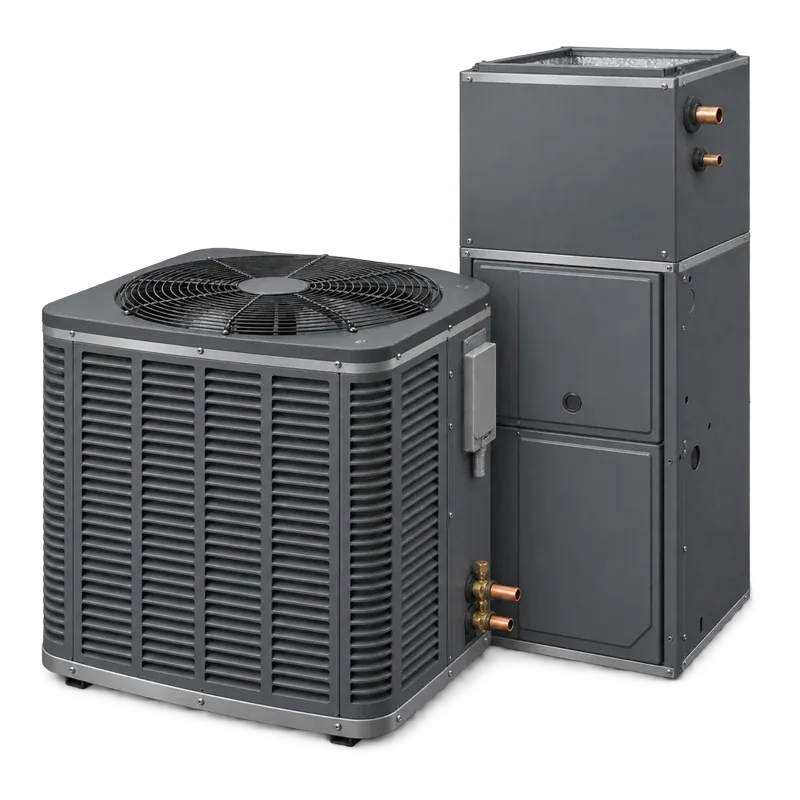
Heat pump with gas backup (dual fuel)
Illustrations are examples. Your advisor confirms the equipment. Build my quote
| Tier | Compressor technology | Heating performance | Best for |
|---|---|---|---|
| Good | Single-stage | Reliable heating in mild to moderate winters; uses backup heat strips during deep freezes | Southern and mild coastal climates |
| Better | Two-stage | Steps between low and high capacity for quieter operation, better summer dehumidification, and steadier winter warmth | Four-season climates and two-story homes |
| Best | Variable-speed inverter (or Dual-Fuel) | Modulates speed continuously; cold-climate models hold capacity down into sub-freezing weather | Cold winters, uneven rooms, and homeowners wanting precise comfort |
Your price depends on the equipment, your home, and installation needs. See financing.
Questions about heat pumps.
Do heat pumps actually work when winter temperatures drop below freezing?
Yes. Newer cold-climate inverter heat pumps extract heat from outdoor air well below freezing without relying heavily on backup heat strips. In regions with severe sub-zero cold snaps or low natural gas rates, a dual-fuel system can switch to a gas furnace on the coldest nights.
What is a dual-fuel (hybrid) heat pump system?
A dual-fuel system pairs an electric heat pump outside with a gas furnace inside. The heat pump handles all your summer cooling and efficiently heats your home through chilly fall and winter days. When outdoor temperatures drop below a set balance point, the gas furnace takes over automatically.
Are there tax credits or utility rebates for heat pumps in 2026?
The federal Section 25C Energy Efficient Home Improvement tax credit ended for systems placed in service after December 31, 2025. However, many electric utilities and state energy offices still offer local rebates for high-efficiency heat pumps. Ask your utility which programs apply. Etho Home doesn’t promise any rebate.
How does HSPF2 relate to SEER2 on a heat pump?
SEER2 measures how efficiently the heat pump cools in the summer, while HSPF2 (Heating Seasonal Performance Factor 2) measures how efficiently it heats across the winter season. Higher numbers on both ratings mean lower electricity use.
Why does the air from a heat pump feel different than a gas furnace?
A gas furnace blows short bursts of very hot air, then turns off. A heat pump delivers a steady stream of warm air (typically around 95–105°F) over longer cycles, which keeps room temperatures much more even without hot-and-cold swings.
Sizing and efficiency.
Sizing and efficiency.
Heating and cooling in one
A heat pump works like a central air conditioner in summer and reverses flow in winter to move warmth inside.
Moves heat instead of burning fuel
Because heat pumps transfer existing heat energy rather than generating it from scratch, they can deliver more heat energy than the electricity they consume.
Cold-climate and dual-fuel ready
Variable-speed inverter heat pumps maintain strong heating output well below freezing, or pair with a gas furnace in a dual-fuel setup.
How a heat pump heats and cools your home
During the summer, a heat pump operates identically to a central AC replacement: it absorbs heat and humidity from inside your house and releases that heat outdoors. When winter arrives, a reversing valve inside the outdoor unit changes the direction of the refrigerant flow. Even cold outdoor air contains thermal energy, and the heat pump absorbs that energy outside, compresses it to a higher temperature, and releases it across your indoor coil to warm your ductwork.
Because a heat pump moves heat rather than creating it by burning gas or heating electric toaster coils, it uses substantially less energy per BTU of heat delivered.
Trying to decide between all-electric heating, gas, or a hybrid setup? Read our complete guide comparing a heat pump vs. furnace.
Good, better, and best heat pump options
Choose a heat pump based on your winter climate and whether you plan to keep a gas furnace:
Understanding SEER2 and HSPF2
Every ducted split heat pump carries two federal efficiency ratings:
- SEER2 (Seasonal Energy Efficiency Ratio 2): Measures summer cooling efficiency. The federal minimum for split-system heat pumps is 14.3 SEER2 nationwide.
- HSPF2 (Heating Seasonal Performance Factor 2): Measures winter heating efficiency across the season. The federal minimum for split-system heat pumps is 7.5 HSPF2.
We break down how these ratings are tested in our SEER2 and HSPF2 guide. New heat pumps manufactured from 2025 onward also use lower-GWP refrigerants such as R-454B or R-32 under the AIM Act phasedown—learn more in our R-454B refrigerant guide.
Sizing for both summer cooling and winter heating
Sizing a heat pump requires more care than sizing a standalone air conditioner. In southern states, the summer cooling load dictates the equipment tonnage. In northern and mid-Atlantic states, the winter heating load may exceed the summer cooling load.
If an installer simply oversizes a single-stage heat pump to cover the coldest January night, that same unit will short-cycle all summer and leave your house humid. Two steps prevent that:
- Variable-speed inverter capacity: Inverter heat pumps can ramp up for winter heating demand while running at low, gentle capacities during mild summer days.
- Proper backup heat or dual-fuel balance points: A room-by-room Manual J calculation (see what size HVAC system you need) sets the size of staged electric auxiliary heat strips or a dual-fuel furnace replacement for extreme cold snaps.
What affects the price of a heat pump replacement
Your total investment in a heat pump installation comes down to a few concrete project variables:
- All-electric air handler vs. dual-fuel furnace: An all-electric system pairs the outdoor heat pump with an indoor air handler and electric heat strips. A dual-fuel system pairs the heat pump with a gas furnace and evaporator coil.
- Compressor tier (single-stage vs. cold-climate inverter): Inverter-driven cold-climate units have more advanced electronics and variable-speed motors, which increase equipment cost while reducing winter power bills.
- Electrical service requirements: If you are converting from a gas furnace to an all-electric air handler with backup electric heat strips, your crew may need to run a new 240V circuit from your main breaker panel.
- Ductwork and thermostat controls: Heat pumps move slightly higher airflow per ton in heating mode than gas furnaces do, and they perform best when paired with properly configured smart thermostats that manage auxiliary heat lockouts.
See how all of these factors come together in our HVAC replacement cost guide. Note that while the federal 25C tax credit expired at the end of 2025, many local electric utilities continue to offer heat pump rebates.
Find the right heat pump for your home.
Your advisor confirms the equipment, scope, and price with you.